

-
Dr. Irfan Atcha says complex dental rehabilitation depends on careful planning, function, healing, and long-term stability.
Illinois, USA, Aug 30, 2026, ZEX PR WIRE — Replacing missing teeth is only one part of full-mouth rehabilitation, according to Chicago implant dentist Dr. Irfan Atcha.
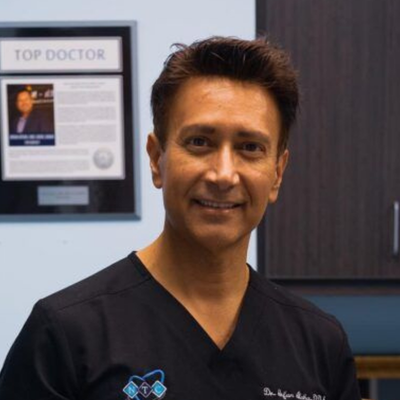
For patients with several missing, failing, or damaged teeth, the greater challenge is understanding how the entire mouth functions as a single system. That means looking beyond individual teeth and considering factors such as bite, bone support, healing, comfort, and long-term stability.
Atcha has spent nearly three decades working with patients who need complex dental rehabilitation. Since beginning his career in Chicago in 1996, his work has increasingly focused on dental implants, full-arch treatment, implant-supported dentures, and cases that require more detailed planning.
“When you are dealing with a complex case, replacing the missing teeth is only part of the picture,” Atcha said. “You have to think about how everything works together and what the patient will need over the long term.”
Full-Mouth Rehabilitation Starts With the Bigger Picture
A patient may first seek treatment for an obvious concern, such as missing teeth or difficulty chewing. But in more advanced cases, the underlying issues may involve several areas at once.
That is why Atcha believes full-mouth rehabilitation should begin with a broader evaluation.
“You cannot always treat one problem in isolation,” he said. “The bite, the bone, the remaining teeth, and the way the mouth functions all influence the final plan.”
That approach has become a central part of his work in implant dentistry.
His areas of focus include same-day dental implants, implant-supported dentures, All-on-4 dental implants, and full-arch rehabilitation. These treatments can involve several clinical decisions that need to work together rather than being addressed separately.
Why Planning Matters Before Treatment Begins
For Atcha, one of the most important parts of complex dental care happens before treatment starts.
A full rehabilitation plan may need to account for the condition of existing teeth, the amount of available bone, the patient’s bite, and how the final restoration is expected to function.
“Good planning means thinking several steps ahead,” Atcha said. “You are not only asking what can be done today. You are asking how that decision may affect the overall result later.”
That long-term mindset has shaped his approach throughout his career.
Atcha often points to “long-term success with dental implants” as one of the key themes in his work. In his view, a treatment should not be judged only by what happens on the day of the procedure.
The larger question is how well the rehabilitation continues to function over time.
Complex Cases Require More Than One Solution
Full-mouth rehabilitation is not a single treatment. Different patients may have very different needs, even when their dental problems appear similar at first.
One person may need several teeth replaced. Another may require a full-arch solution. Others may need a combination of treatments to rebuild function across the mouth.
That is why Atcha sees experience and clinical judgement as important parts of the process.
“Two patients can come in with what looks like the same problem and still need very different treatment plans,” he said. “You have to understand the individual case rather than trying to force every patient into the same approach.”
That principle has guided much of his work with complex implant patients in the Chicago area.
Nearly 30 Years of Changing Treatment Options
Atcha began practising in 1996 after earning his Doctor of Dental Surgery degree from the University of Illinois College of Dentistry.
He had previously earned a Bachelor of Science in Biochemistry from the University of Illinois in 1991, and his early interest in research continued during dental school, where he received first-place recognition for a biochemistry table clinic presentation.
Over the decades since, implant dentistry has continued to evolve. Advances in imaging, treatment planning, materials, and clinical techniques have created more options for patients with advanced dental needs.
Atcha has continued his education alongside those changes, earning Fellowship and Diplomate recognition through both the International Congress of Oral Implantologists and the International Dental Implant Association.
He says new technology can improve treatment planning, but it does not remove the need for careful evaluation.
“Technology gives us more information, but the information still has to be interpreted,” he said. “The goal is to use those tools as part of a complete plan.”
Looking Beyond Missing Teeth
For patients considering full-mouth rehabilitation, Atcha believes the most important conversation is often about the larger goal. Replacing missing teeth may be the most visible part of treatment, but restoring function requires looking at how the whole system works together.
That means considering not only what is missing, but also what remains, how the patient bites, how healing may occur, and how the final result is expected to perform over time.
For Atcha, that broader perspective is what separates simple tooth replacement from full-mouth rehabilitation.
“The goal is not just to fill a space,” he said. “The goal is to create a treatment plan that makes sense for the whole mouth and for the patient’s long-term needs.”
For more information about Dr. Irfan Atcha and New Teeth Chicago, visit newteethchicago.com.
About Dr. Irfan Atcha
Dr. Irfan Atcha is a Chicago-based implant dentist who has been practising since 1996. He earned a Bachelor of Science in Biochemistry from the University of Illinois and a Doctor of Dental Surgery degree from the University of Illinois College of Dentistry. His work focuses on dental implants, full-arch rehabilitation, same-day dental implants, implant-supported dentures, and complex treatment planning.

Disclaimer: The views, suggestions, and opinions expressed here are the sole responsibility of the experts. No journalist was involved in the writing and production of this article.
